Remote patient monitoring (RPM) can help reduce hospital readmissions by giving care teams greater visibility into changes in a patient’s health between visits. But collecting device readings alone isn’t enough.
A strong care management program connects remote patient data with risk detection, patient engagement, clinical workflows, and clear escalation processes. This helps care teams identify concerning changes earlier, determine which patients may need attention, and intervene when appropriate.
ChronicCareIQ brings these capabilities together in one care management platform. Practices using ChronicCareIQ have reported an average 29.4% reduction in hospitalizations.
How Does Improved Visibility Help Reduce Readmissions?
Better visibility gives experienced care teams more information to act on between office visits.
A blood pressure reading, weight change, pulse oximetry measurement, or patient-reported symptom only becomes useful when the right person recognizes its significance and knows what to do next.
Providers should therefore evaluate how an RPM vendor handles the entire process:
- Collect patient information between visits.
- Identify meaningful changes.
- Prioritize patients based on risk.
- Surface those patients to the care team.
- Support clinical follow-up.
- Document what happened.
- Continue monitoring after intervention.
The important question is, “What happens after the reading arrives?”
How Does ChronicCareIQ Handle the RPM Process?
Basic RPM systems may alert care teams when a reading crosses a predetermined threshold.
While useful, a single reading doesn’t always tell the complete story.
A measurement that is typical for one patient could signal a meaningful change for another. Understanding risk often requires additional context about the patient and how their health is changing over time.
ChronicCareIQ’s RiskIQ helps care teams identify rising-risk patients using information such as patient responses, connected-device readings, and available clinical data.
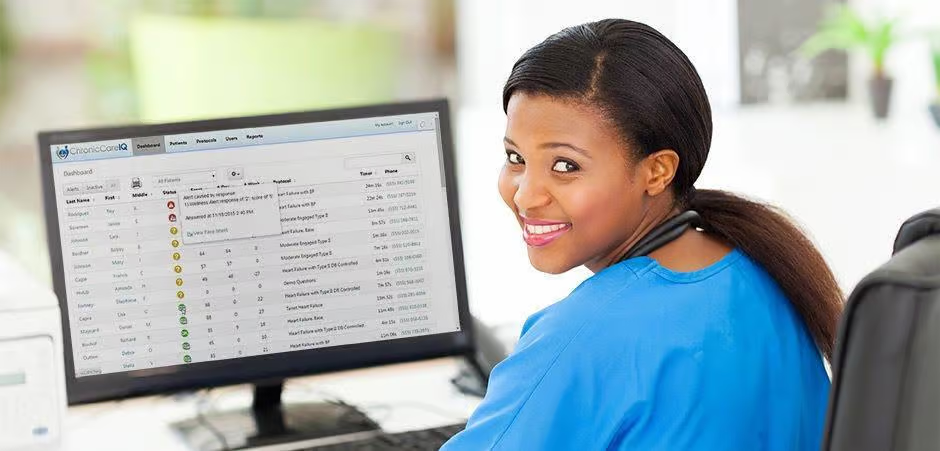
Instead of presenting staff with another queue of incoming measurements to review, RiskIQ creates a prioritized view of the patient population. Patients who may need attention are surfaced prominently, helping care teams determine where to focus their time.
This becomes especially important as RPM programs grow. When hundreds or thousands of patients are enrolled, manually reviewing every incoming measurement can create a significant operational burden. Prioritization helps teams focus on the patients who may benefit most from intervention.
Patient Engagement Matters, Too
An RPM program can’t identify changing risk without regular patient participation.
That’s why providers should evaluate the patient experience alongside the clinical dashboard.
Consider:
- How difficult is it for patients to submit information?
- Can patients report symptoms in addition to device readings?
- Can the program support regular patient check-ins?
- How does the care team know when engagement changes?
- How easily can staff follow up?
ChronicCareIQ reports 87% patient retention after one year. Better communication also helps patients become more engaged with their care plans because they know their care team is paying attention.
“We’ll have patients all the time say, ‘I knew you were going to call and ask about it, so I went ahead and did it.'”
– Amanda Austin | Associate Vice President of Coordinated Care at Arcare
Patient engagement directly impacts hospitalization reductions. If a patient has a question, they can reach out to their provider instead of going to the ER. And with patients sticking to their care plans, they are able to stay healthier and stay at home.
RPM Should Connect With Care Management
Patients at risk of hospitalization rarely need monitoring in isolation. They may also need medication follow-up, care coordination, chronic care management, post-discharge support, or regular communication with their care team.
That’s why providers evaluating RPM vendors should consider whether the technology fits into a broader care-management strategy.
ChronicCareIQ brings RPM together with programs including CCM, PCM, TCM, APCM, RTM, BHI/CoCM, and CPM. Instead of treating an RPM reading as an isolated data point, practices can incorporate monitoring into a broader longitudinal view of the patient. Bringing multiple care programs together also reduces the need for teams to switch between disconnected systems to understand what’s happening with a patient.
What Should Providers Look for in an RPM Platform?
If reducing avoidable hospitalizations is a priority, providers should evaluate more than whether an RPM platform can collect device data.
Look for technology that helps your team:
- Maintain visibility into patients between visits.
- Detect meaningful changes in patient status.
- Prioritize patients based on risk.
- Engage patients consistently.
- Support clear clinical escalation and follow-up.
- Integrate monitoring into broader care management workflows.
- Document care activity efficiently.
- Scale the program without creating another manual workload.
Ultimately, RPM is most valuable when it helps care teams move from simply collecting data to knowing where and when to act.
Frequently Asked Questions
Can remote patient monitoring reduce hospitalizations?
Remote patient monitoring can give care teams additional visibility into patient health between visits, creating opportunities to identify concerning changes earlier and intervene when appropriate. Outcomes depend on factors including the patient population, clinical program, engagement, workflows, and follow-up processes. Practices using ChronicCareIQ have reported an average 29.4% reduction in hospitalizations.
What features should an RPM platform have to help reduce readmissions?
Providers should look for capabilities such as connected-device support, patient engagement, risk detection, patient prioritization, clinical escalation workflows, EHR integration, documentation, and reporting. Just as importantly, the platform should provide a clear workflow for turning incoming patient information into appropriate clinical action.
How does ChronicCareIQ help identify high-risk patients?
ChronicCareIQ’s RiskIQ uses information including patient responses, connected-device readings, and available clinical data to help care teams identify changes in patient status and prioritize patients who may require attention.
Is collecting RPM device data enough to reduce readmissions?
Not by itself. Device data provides visibility, but practices also need effective processes for reviewing that information, identifying risk, communicating with patients, escalating concerns, documenting interventions, and continuing follow-up.
Can RPM work alongside other care management programs?
Yes. RPM can complement programs such as Chronic Care Management (CCM), Principal Care Management (PCM), Transitional Care Management (TCM), and Advanced Primary Care Management (APCM). Connecting these programs can give care teams a more complete view of the patient’s needs between visits.